From the Depths of History She Flies Again
Powered flight began over 100 years ago in 1903. Applied science and shipping design take, of form, changed a considerable amount since then. Early changes saw the perfection of the techniques and methods of flights. These then moved to improve designs to meet irresolute trends and demands and to focus on profitability and efficiency. Going forrard, this will likely go on, but with an fifty-fifty greener bending.
In this article, we take a look at the key moments and events in the development of the aeroplane. There are lots of things to hash out, and we tin can't comprehend everything, but we will cull some of the most pregnant.
[powerkit_toc title="Table of Contents" depth="2" min_count="four" min_characters="1000"]
Earlier powered flying
Nosotros tend to think of the start of the airplane as the first "sustained and powered" flight, and the Wright brothers are regarded as the first to attain this, in 1903. But there had been involvement and experimentation in flight long before this.
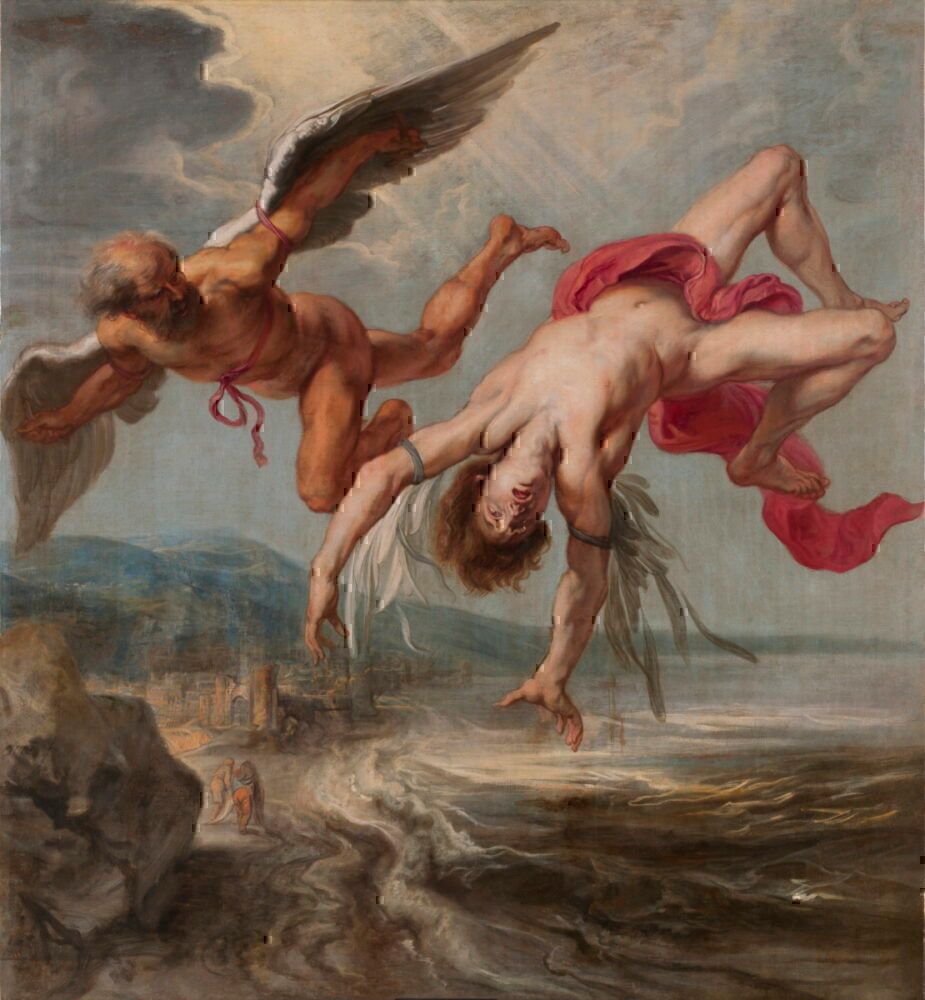
For possibly the earliest recorded pondering of flight, take a wait at the Greek legend of Icarus, from over ii,000 years ago. Icarus and his begetter try to escape from Crete (and the Minotaur) using feather and wax wings. Around the same fourth dimension, several Indian epics refer to flying palaces (known as Vimana).
The earliest possible real experiments start in the 9th Century with the Andalusian inventor Abbas ibn Firnas designing a elementary glider. Writings at the time refer to how he "flew faster than the phoenix in his flight when he dressed his body in the feathers of a vulture."
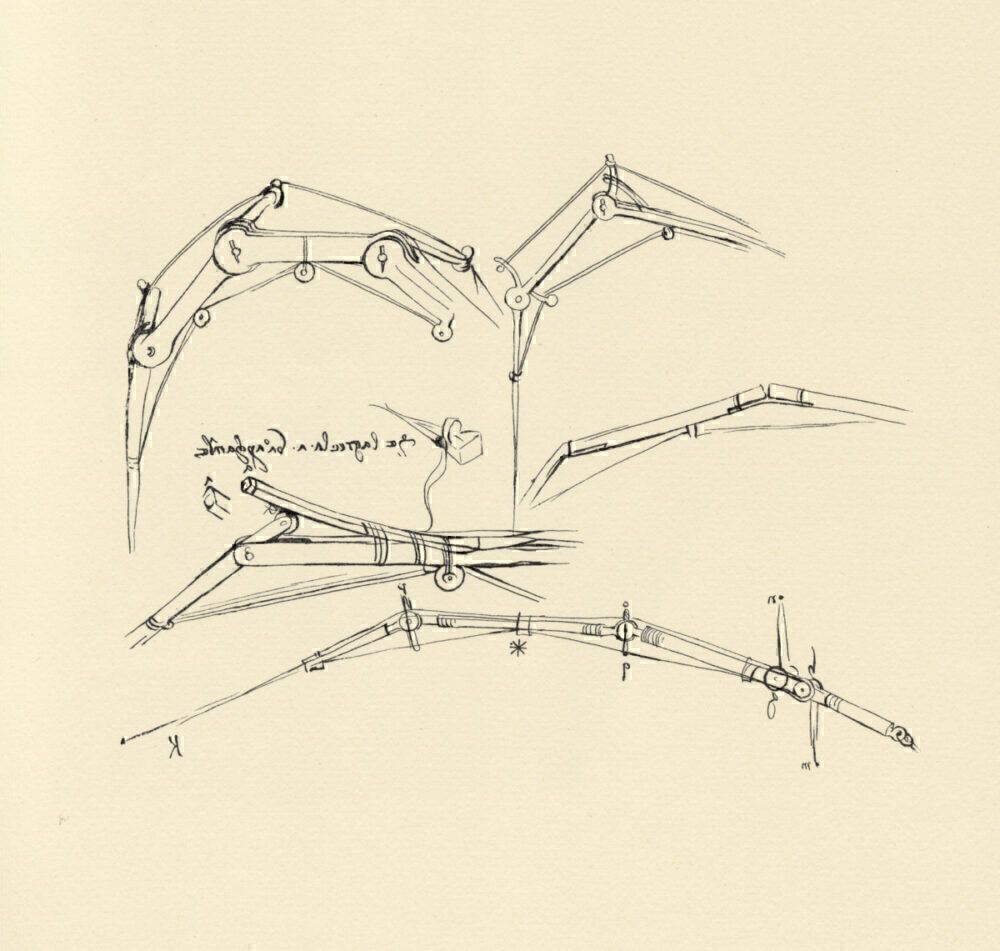
Some more in-depth experimentation took identify in the 16th Century. Leonarda da Vinci researched the flight of birds and designed several flying machines based on this. His work survives in the "Codex on the Flying of Birds." These are fascinating works, but as far as we know, no successful flight car was congenital from them.
Powered propeller aircraft
Leading up to the Wright brothers
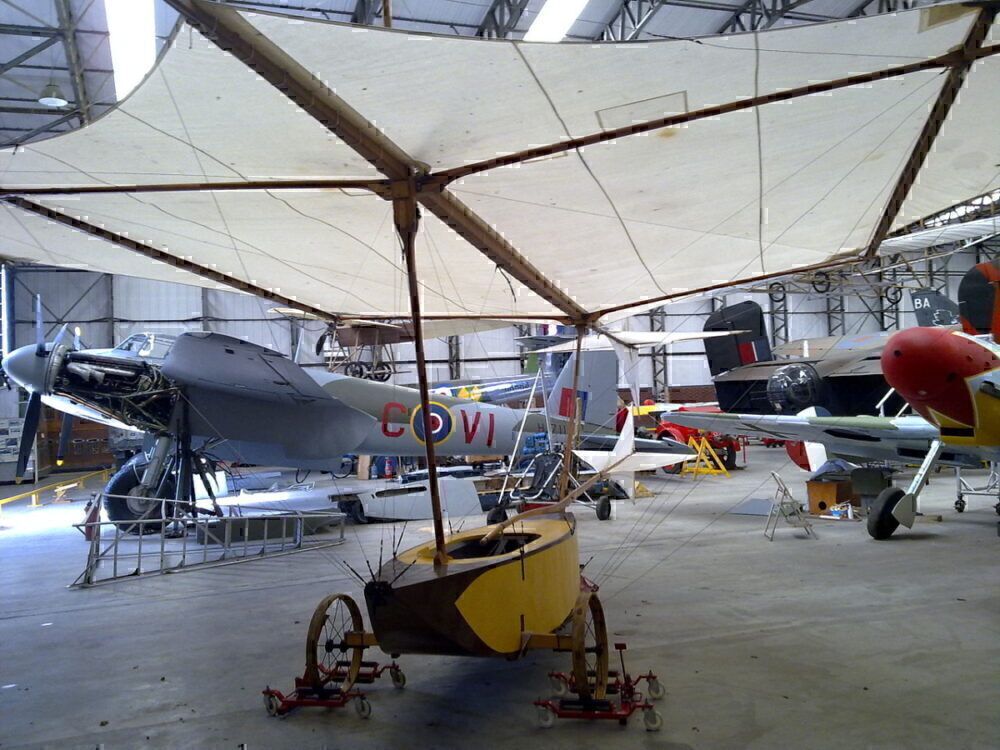
The English engineer George Cayley is one of the most important figures in the early evolution of the aeroplane. He was the offset to investigate and document the forces of flight (weight, lift, drag, and thrust) and develop the concept of the plane every bit a fixed-wing machine with systems for elevator, propulsion, and control.
He designed and built several models, including successful gliders. His piece of work, however, was limited by a lack of engine ability or lightweight components. Nonetheless, what he designed had a lot of similarities with later powered aircraft, including the main wing and tail stabilizers.
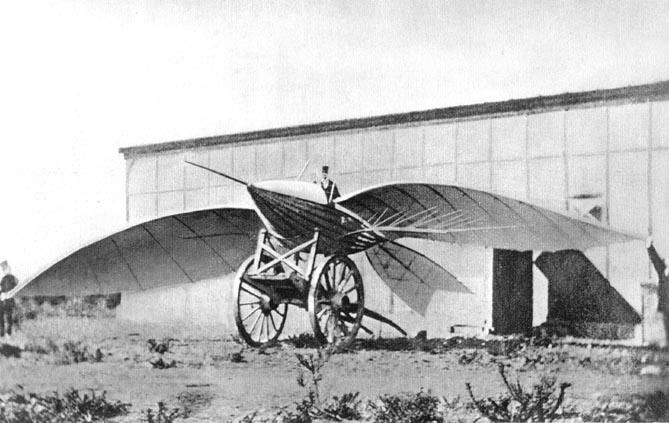
Following the detailed studies by Cayley, there were several attempts to put them into practice. French aviator Jean-Marie Le Bris achieved flight with a glider pulled past a equus caballus.
And in 1886, another French aviator, Clement Ader, built a steam-powered airplane, known as 'Eole.' This had partial success, achieving flight off the ground of about 50 meters.
The Wright brothers beginning flights in 1903
It was in 1903 that the first successful powered flight took place. Wilbur and Orville Wright flew the first powered airplane on December 17th, 1903, virtually Kitty Hawk in North Carolina. This is recorded past the record-setting body, the Fédération Aéronautique Internationale, every bit "the first sustained and controlled heavier-than-air powered flight."
This beginning endeavour in 1903 was a unproblematic ane. The aircraft just flew 37 meters and stayed airborne for but 12 seconds. The brothers kept working on this, and by 1905 their third aircraft, the Wright Flyer III, was capable of longer, controlled flight. The longest test flight in 1905 lasted 39 minutes and covered over 38 kilometers, with larger fuel tanks and engine coolant added to facilitate more prolonged functioning.
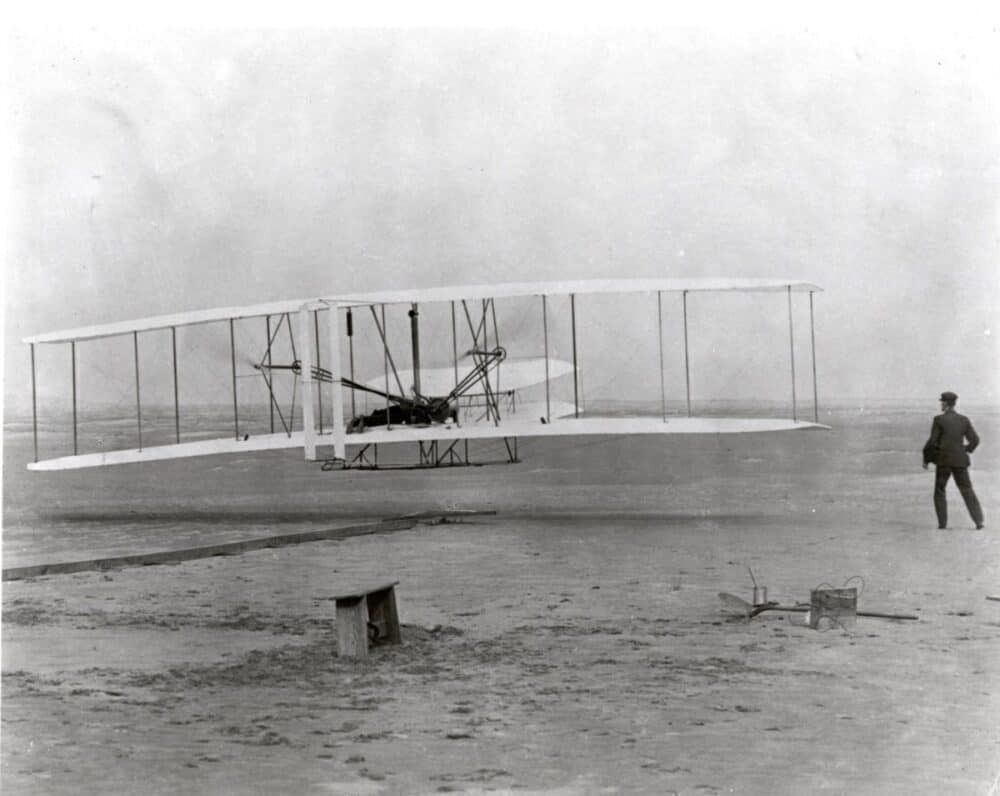
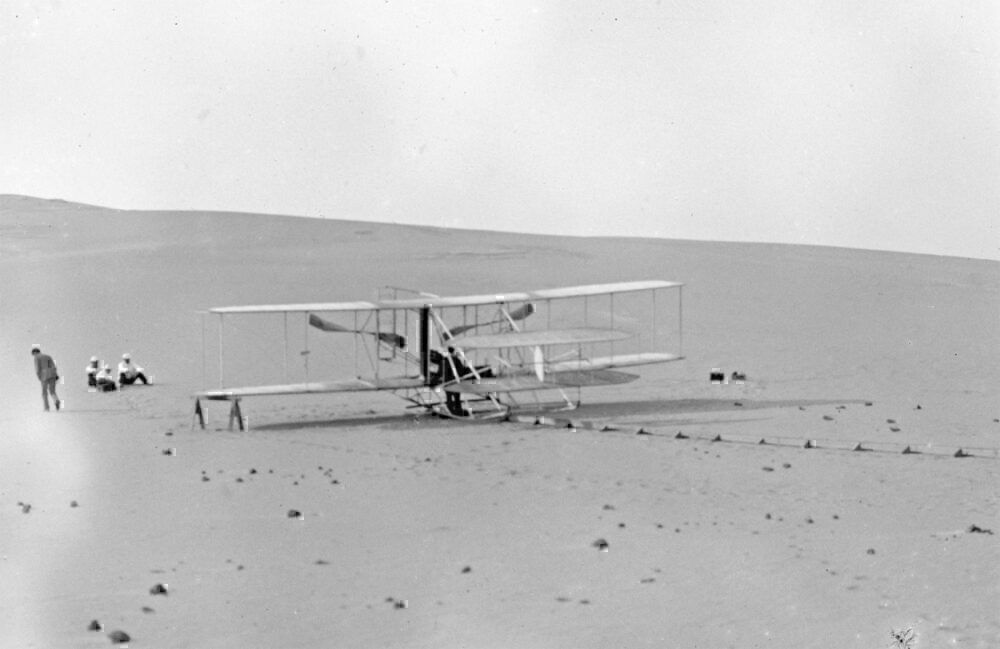
Afterward these successful flights, the brothers disassembled the aircraft to foreclose competitors from copying it. It was not until 1908, when the brothers had secured contracts in America and France, that it flew over again. This time it was converted to conduct a passenger. And in May 1908, mechanic Charles Furnas became the first airplane passenger in history.
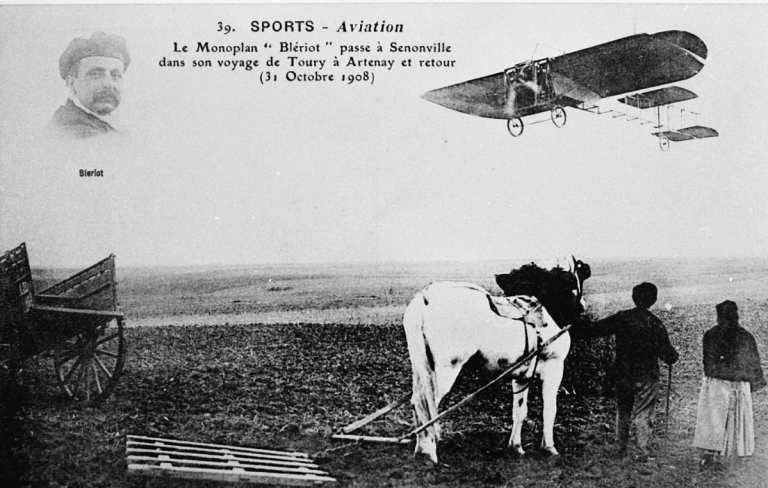
Other aviators were working on similar designs around the aforementioned fourth dimension. Perhaps the nearly significant was from the French inventor Louis Bleriot. The Bleriot Viii airplane, flying in 1908, first introduced the concept of a unmarried stick to control both roll and pitch, with a foot-operated pedal for the rudder. The same concept, of course, has remained with aircraft right up to today.
Military aircraft from 1914
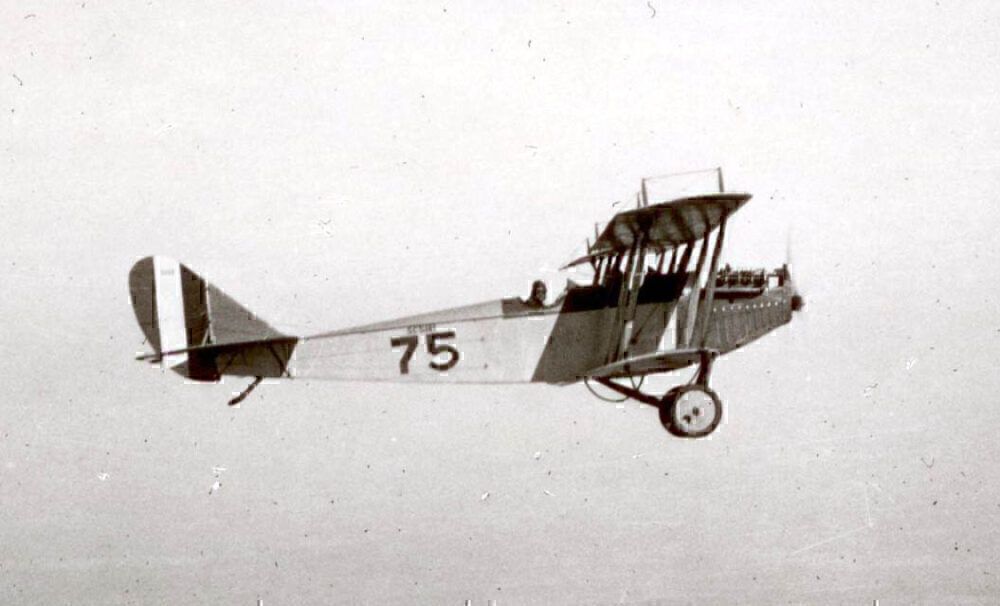
The outbreak of World State of war I in 1914 led to many companies and governments expediting aircraft design for military machine purposes. The propeller-based technology adult for previous early aircraft was taken further, producing larger aircraft with more speed and range.
Italy was one of the first countries to operate military reconnaissance aircraft (during the Italian Turkish war in 1911). And during World War I, many countries used new or modified aircraft for photography, reconnaissance, bombing, and air to air combat.
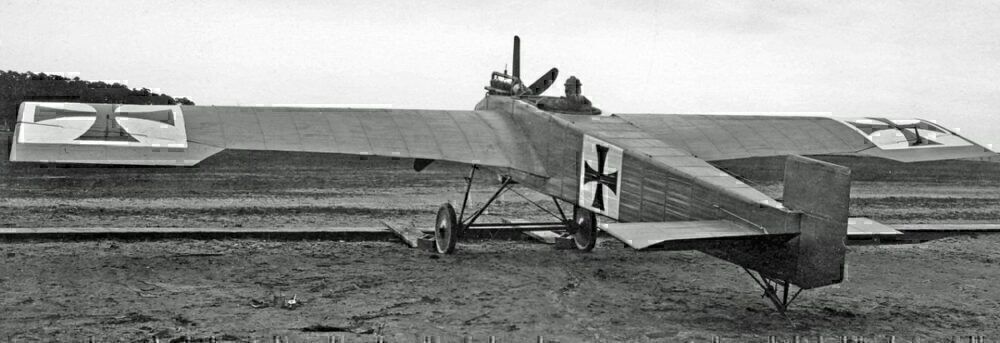
In terms of aircraft technology, ane of the almost significant developments came from German engineer Hugo Junkers. His Junkers J1 aircraft, starting time flight in 1915, was the first aircraft to have an all-metal airframe. This was of import for the later development of larger passenger aircraft.
Developing commercial possibilities
Too equally development for military utilize, companies began looking at the possibilities for revenue earning passenger flights.
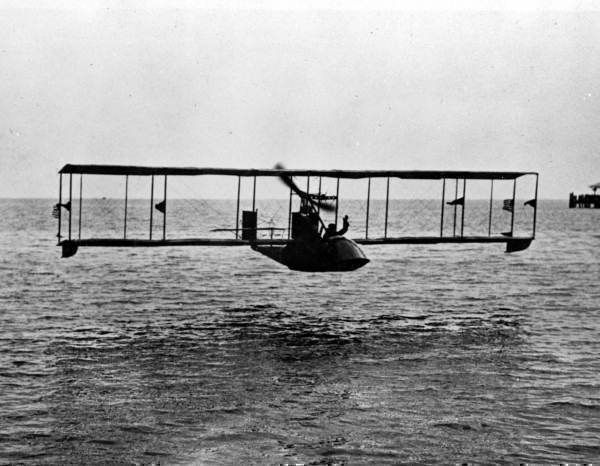
The first passenger service started in 1914. In January that twelvemonth, the St. Petersburg-Tampa Airboat Line started a service between St. Petersburg and Tampa across Tampa Bay in Florida. This twenty-minute flight was a significant milestone, forming the showtime of commercial aviation.
Subsequently the war, at that place was a rush of propeller based shipping onto the civilian market. This gave rise to a new industry of leisure and sightseeing flights, every bit well equally demonstrations and air shows. But there was also desire, and incentives, to develop new services and expand the limits of aircraft.
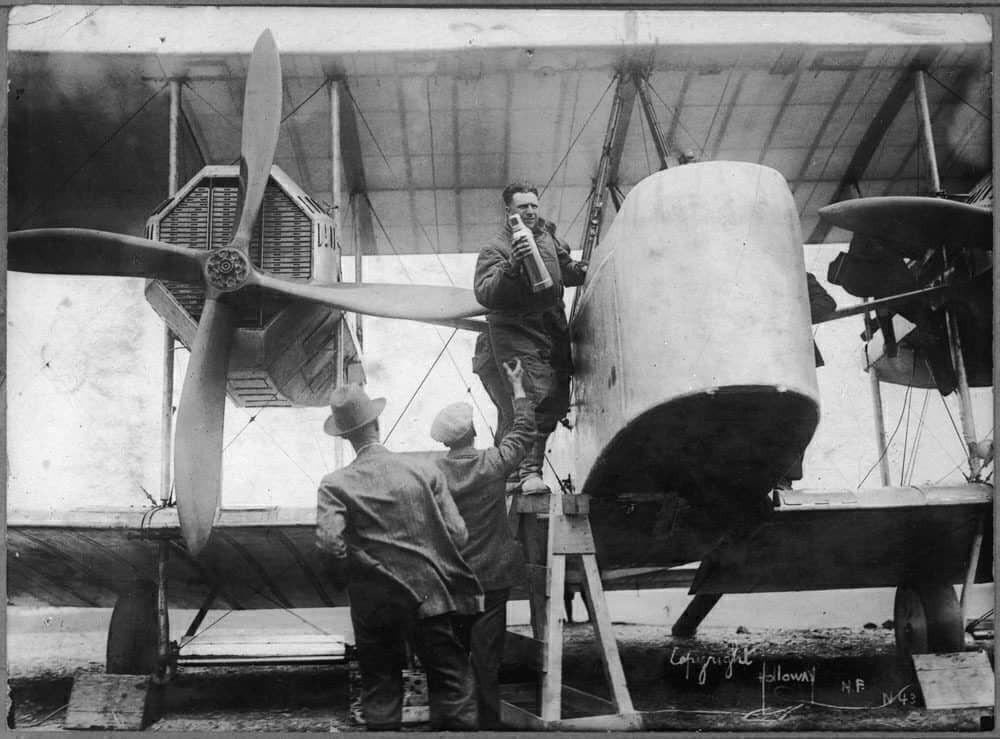
The first transatlantic flight took identify in 1919, with British aviators John Alcock and Arthur Whitten-Brown flying a modified Vickers military machine aircraft. This followed the offering of a prize of £x,000 from the Daily Mail newspaper in London for the first successful flight "from any betoken in the United states of America, Canada or Newfoundland and whatever betoken in Great Britain or Ireland in 72 continuous hours."
In 1927 Charles Lindberg won the $25,000 prize for the get-go solo non-stop crossing of the Atlantic. And Australian Charles Kingsford Smith (and crew) became the starting time to cantankerous the Pacific in 1928 and the showtime to wing around the earth in 1929.
This era saw a lot of experimentation and evolution with aircraft types as well. For example, the German-built Dornier Practice X, launched in 1929, was the largest shipping at that time. It could deport up to 169 passengers (but usually simply 66, or less if converted for overnight sleeping accommodation). This twelve-engine aircraft had a range of up to 1700 kilometers and offered great potential. But three were built, though, with the Swell Low of the 1930s taking its cost.
Commercial success with the Douglas DC3
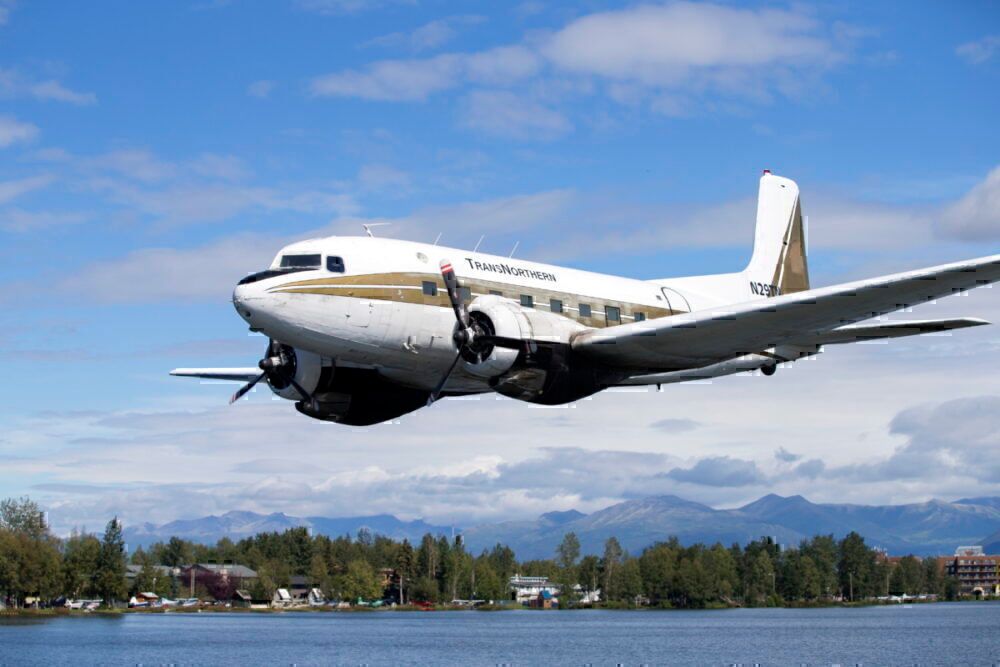
The years later World State of war I saw many aircraft developments. The aim was always the operation of successful and profitable commercial flights. The first aircraft to achieve this was the Douglas DC-3, launched in 1936. This was not large (compared to aircraft today, or fifty-fifty some predecessors) with a capacity of merely 32 passengers (or xiv if equipped with beds).
The DC-3 improved on range, speed, and reliability. It offered a transcontinental US service with just 3 stops. According to assay in the Smithsonian, it was the first assisting passenger aircraft, able to operate passenger services without any cargo or mail service subsidies.
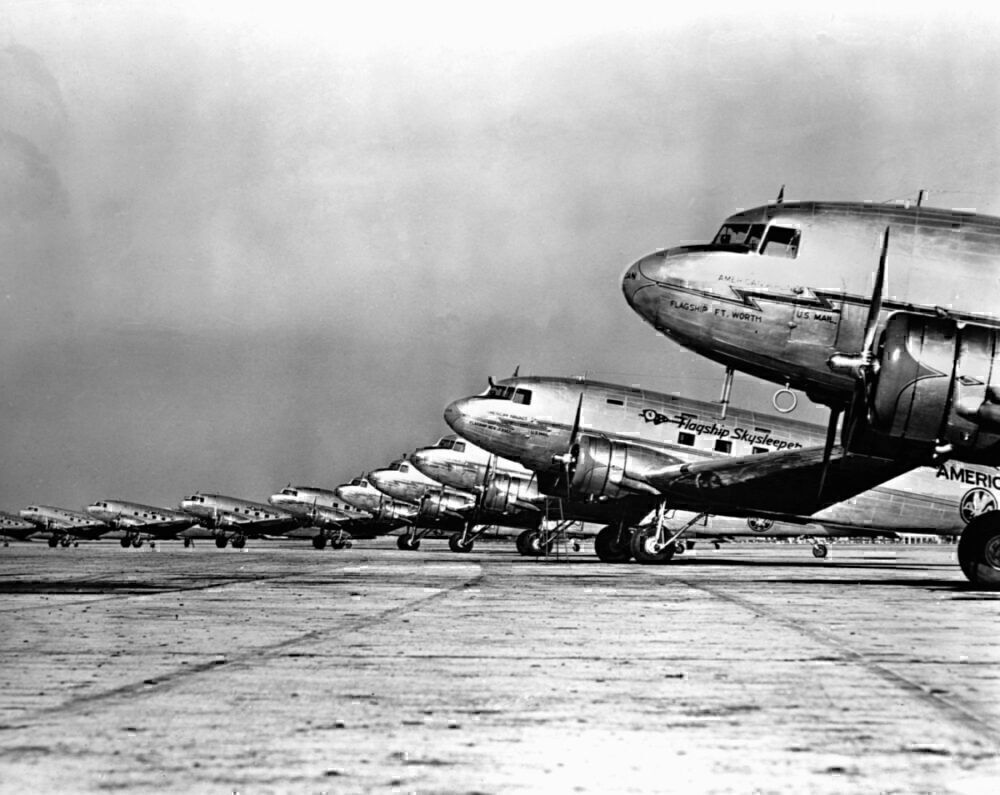
In total, over 11,000 aircraft (including variants) were congenital. Production connected upward to 1942 when the surplus of ex-military machine aircraft entering the marketplace after World War Two saw its stop. It is certainly a long-lived and well-built shipping. As of August 2020, there were 172 DC-3 shipping still in operation (though sadly non in passenger service).
The start of the jet historic period – 1952
The adjacent major advance in airplane pattern was with the introduction of the jet engine. Development piece of work on jet engines began in the 1930s, and the first operational jet aircraft was the German language Heinkel He 178 in 1939, and and then the Messerschmitt Me 262, which saw military service in Germany from 1947. And in Britain, Boeing introduced the jet-powered B-47 for military utilise in 1947.
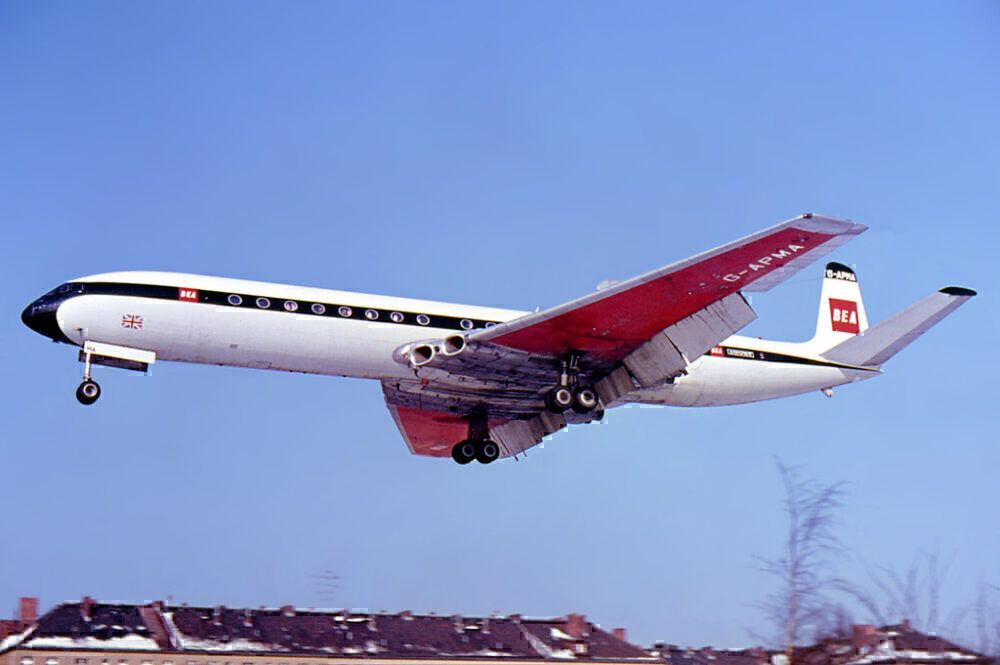
The start passenger jet aircraft though, was the de Havilland Comet, inbound service in 1952. While information technology marked a significant step forward in aviation, this early jet shipping had a number of serious bug. Most notable were issues with its fuselage, windows, and pressurization. It was not until its quaternary iteration, the Comet iv, that the bug were solved and sales increased. But, past this fourth dimension, other shipping designers had learned from its mistakes and offered competitive alternatives.
The Boeing 707
There were several successors, and competitors, to the Comet, including the DC-8, Vickers VC-ten, the Tupolev Tu-104, and the Boeing 707. These were all interesting aircraft in their own ways, just the 707 stands out every bit the most successful.
Boeing built on its previous military success with the 707. It used the aforementioned Pratt & Whitney turbojet engines every bit the B-52 Stratofortress, and its original design was intended to double upwardly every bit a armed services tanker aircraft. It first flew in December 1957 and remained in product until 1978, with 856 built and delivered to airlines.
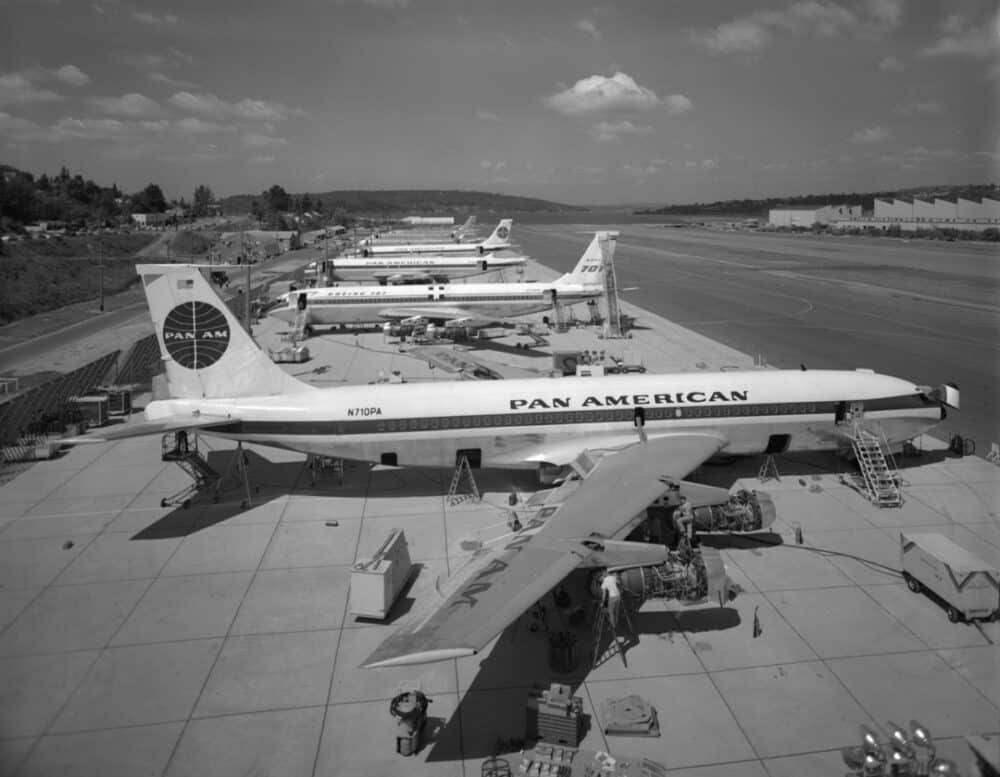
While it was not the outset commercial jet aircraft, it was the first highly successful one and is often credited equally the start of the jet age. It besides established Boeing as a dominant civilian manufacturer, with the 7x7 series continuing, of grade, to today.
Boeing incorporated many design elements based on problems with before jet aircraft and from customer feedback. This included:
- A wider fuselage, assuasive 5 beside seating and meliorate cargo payload.
- Moving engines to underwing pods was considered safer in the event of a burn down.
- Changes to flap design, and fuselage strengthening.
Adapting to the market – the 737 and the A320
Since the 1950s, at that place have been fewer fundamental changes to aeroplane blueprint. Jet engines take remained only improved in power and efficiency, and cabin and cockpit technology has similarly improved only is nonetheless based effectually the same designs and concepts.
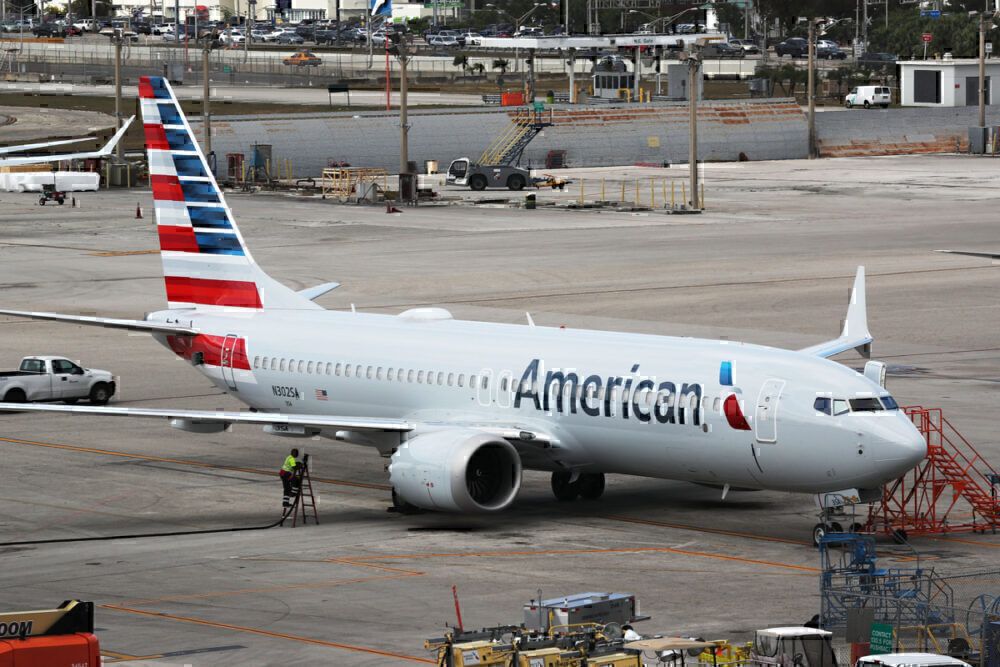
Boeing's development to the 737 series shows this well. Following its success with the 707 and 727, it designed a new shipping to beat the competition and win customers. The aircraft launched in 1967 and offered several design differences from the competition:
- Two engines rather than iii or four. This appealed to customers looking to lower costs.
- Engines mounted under the wings, offering easier access and assuasive a wider cabin.
- A wider fuselage offering six beside seating, and handling of standard cargo containers.
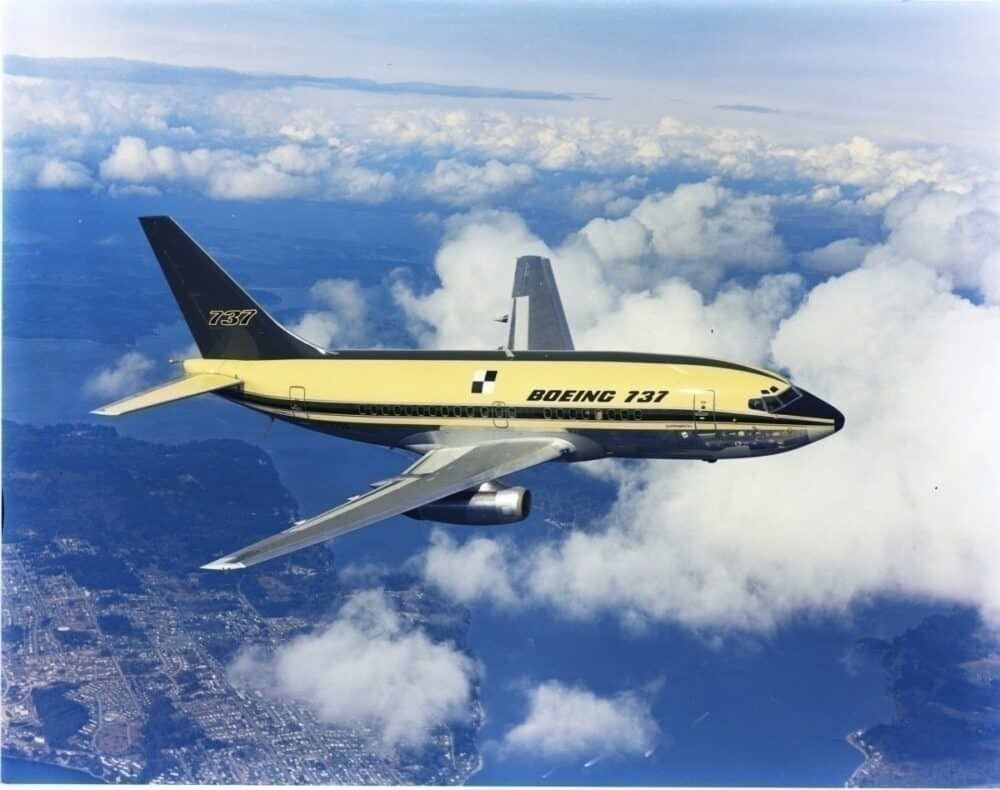
The 737 has remained with us since 1967, moving through many variants. Each of these has offered updates to meet airline preferences and demands. This has included, for example, options such as combined cargo models, and adaptions for gravel landing, and an evolving focus on new engine technology and efficiency improvements.
But the base blueprint, fuselage structure, and fly design, for case, take remained much the aforementioned. Why modify what is already working, when you can improve it instead?
The Boeing 737 has been the near sold shipping to appointment, with ten,580 aircraft delivered across all 737 families (according to data from Boeing as of July 2020).
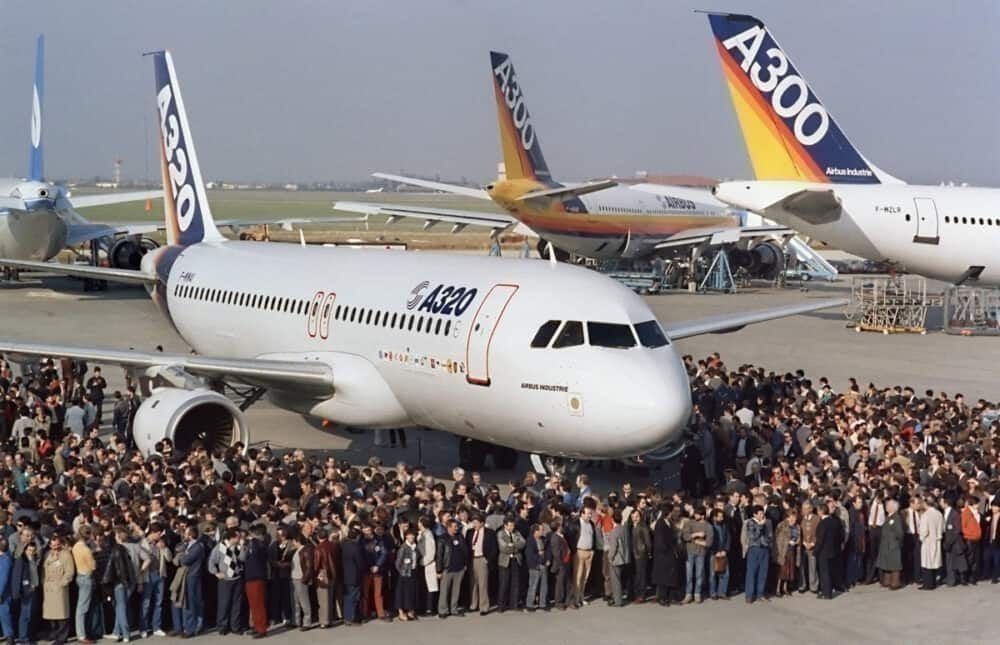
And Airbus has followed a similar model with its A320 family. Since the launch in 1987, Airbus has offered several dissimilar sized variants and evolved these to provide technology and efficiency upgrades.
It may have started subsequently than Boeing, simply it has as well seen tremendous success. The A320 family now beats the Boeing 737 in numbers of shipping ordered.
Making aircraft larger – the Boeing 747
The other significant change since the early jet shipping is the evolution of larger aircraft. The all-time example here is the launch of the Boeing 747 in 1970, which has been the all-time selling widebody aircraft to appointment.
The motivation for this came from Pan American World Airways. It asked Boeing to pattern an aircraft around two.5 times the size of the Boeing 707, and evolution began once Pan Am committed to an order for 25 aircraft in Apr 1966. Such close interaction between 1 airline and a manufacturer is unusual, and the involvement of Pan Am in the development of the 747 is unmatched in other developments.
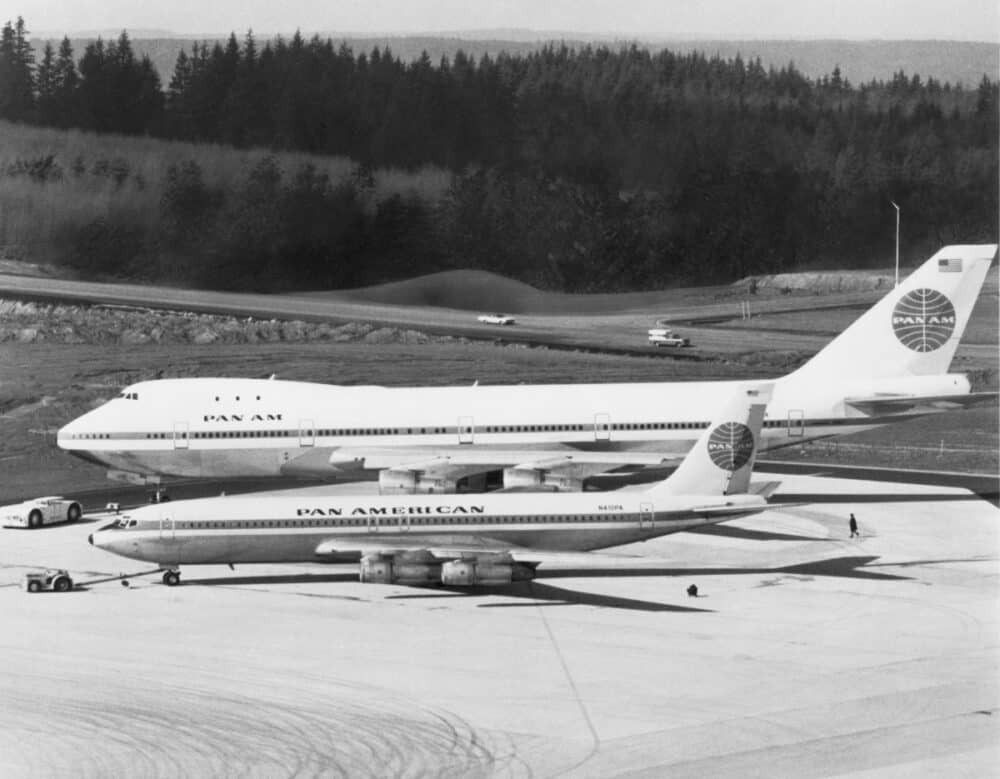
Such a large aircraft required several changes to previous aircraft design, including:
- The addition of a 2d deck. This was initially planned to be a full deck, only this was not possible due to safety restrictions at the fourth dimension. The resulting pattern allowed for a full deck of cargo, and nose loading, a significant success factor for the 747.
- A new high-bypass turbofan engine design was needed for the larger, heavier airframe. Pratt & Whitney joined the 747 evolution, designing the JT9D engine specially for it.
The 747 was significant non just from a technical bespeak of view, only also from an economical one. It inverse travel in several means. Information technology immune airlines to offer lower fares and longer routes. Combined with the deregulation of airfares in the U.s. around the time of its launch, this opened flight to more passengers.
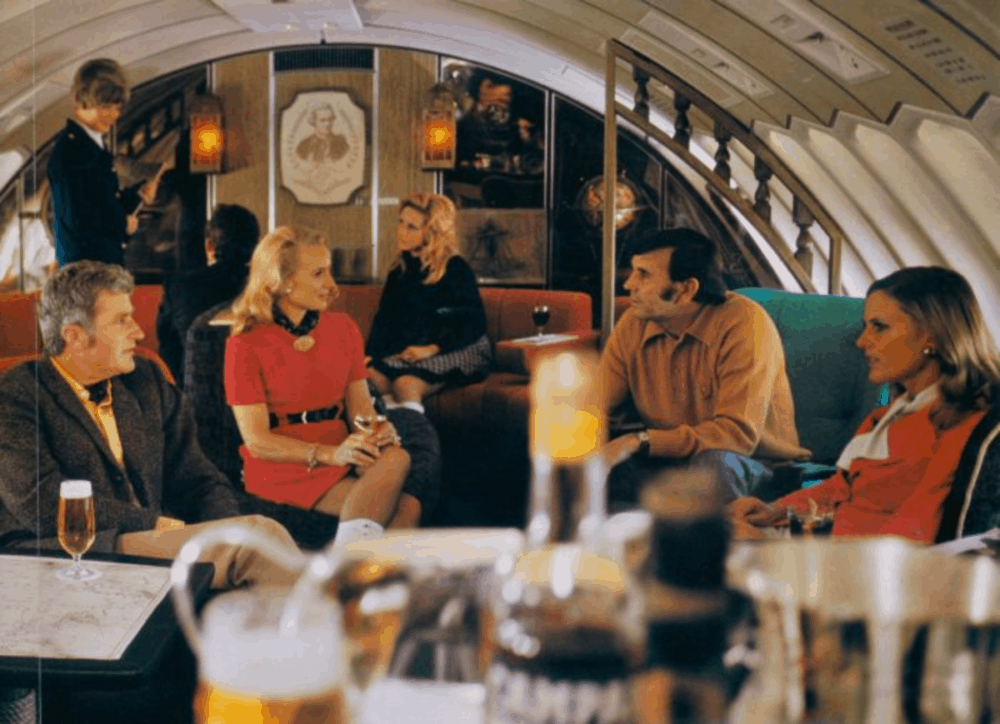
The actress available space gave airlines new options for onboard facilities and cabins. Some of the luxuries seen in the early days of aviation returned, including spacious first form cabins and lounge areas. Airlines also used the extra infinite to create new cabins. This started in the 1970s with some airlines creating a 'premium' offering inside their economy cabins, and by the 1980s, it led to the creation of business class as a third motel.
And larger over again with the A380
Aircraft size limits would not be pushed so far again until the development of the Airbus A380. Airbus looked at various versions of a large shipping, including an interesting blueprint of combining two big fuselages next (based on the A340). This eventually led to the concept of a two-deck aircraft. The A380 was formally announced at the Farnborough Air Show in 1990, with a target of xv% lower operating cost than the 747.
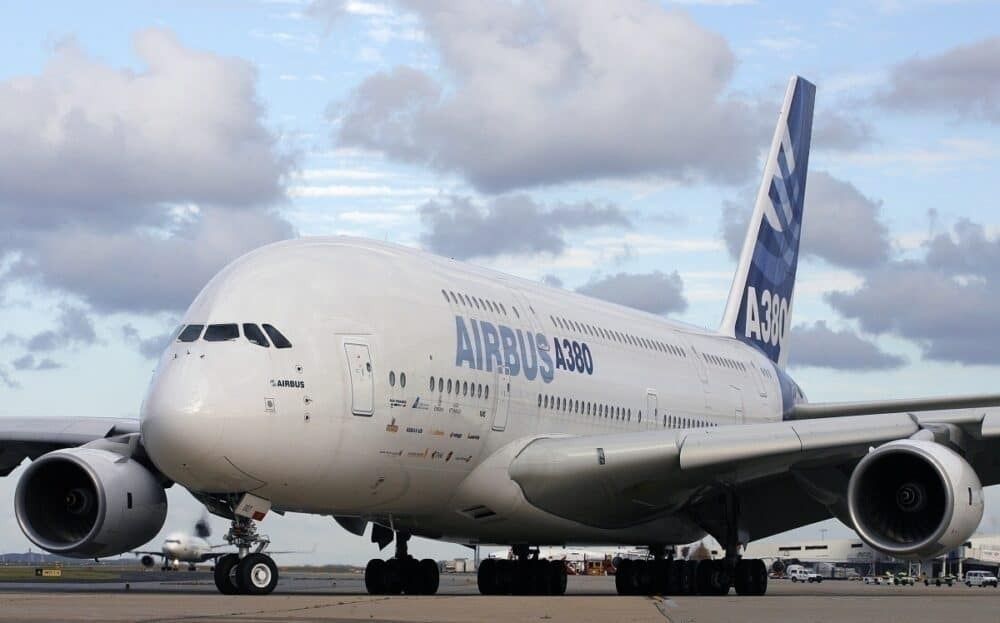
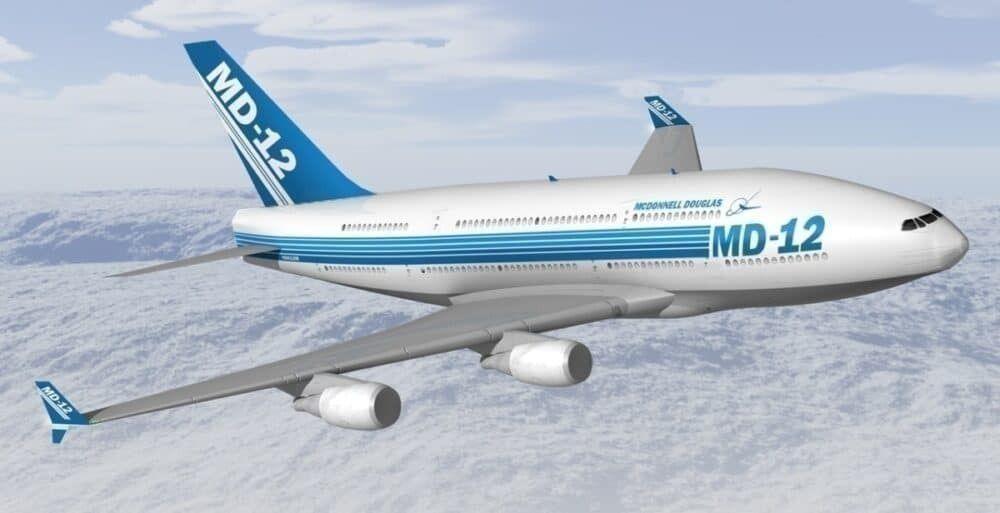
Several other large shipping were proposed merely never congenital, including:
- The 2-deck McDonnell Douglas MD-12, proposed in 1993 but canceled due to lack of interest from airlines
- Lockheed Martin planned a Big Subsonic Ship aircraft in 1996, seating over 900, merely faced technical challenges.
- Russian federation proposed an ever larger, upwards to 1000 chapters, Sukhoi KR-860.
- And Boeing twice proposed to stretch the 747 but dropped information technology to follow point to point models with the 777.
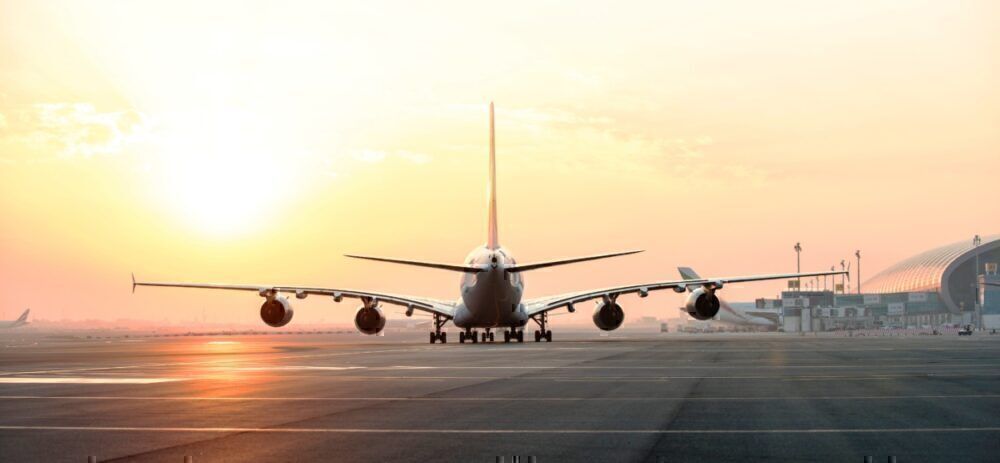
The A380 is a great shipping, merely it has not seen the same success equally the 747. It is non so much the design that has let it downwards - finally engineering a two-deck aircraft was an outstanding accomplishment. It was more the changes in operating models and preferences that sealed its fate.
The A380 has been far from a failure, with 251 orders. Nosotros take looked before at why the A380 has not been and then successful. The idea at the time of launch was that airlines would use it for high capacity, hub-to-hub routes.
Preferences changed though, with many airlines shifting to a point to point model, with more efficient, lower capacity shipping. Information technology also carries i significant pattern limitation: its size and big wingspan severely limit the airports to which it tin operate. This is something that Boeing has learned from with its new 777X, developing folding wingtips to get around this trouble.
Supersonic aircraft
For many aviation enthusiasts, the acme of jet age possibilities was reached with supersonic flight. The audio bulwark was commencement broken in 1947 by the American experimental shipping, the Bong X-1. This was powered by a rocket-based engine using liquid oxygen and ethyl alcohol.
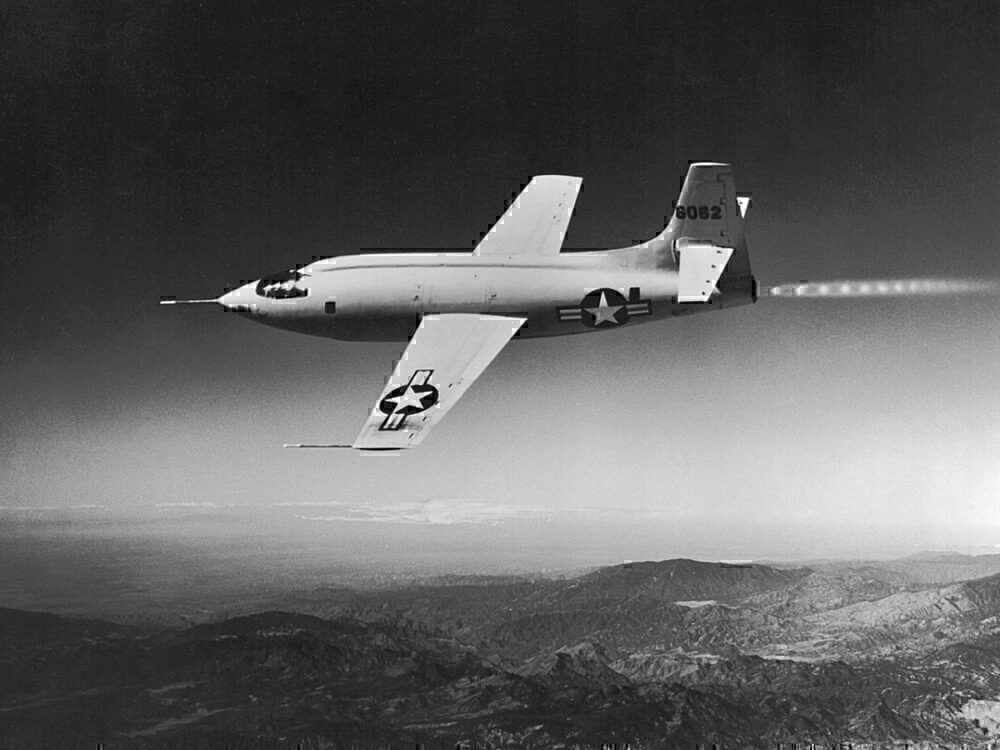
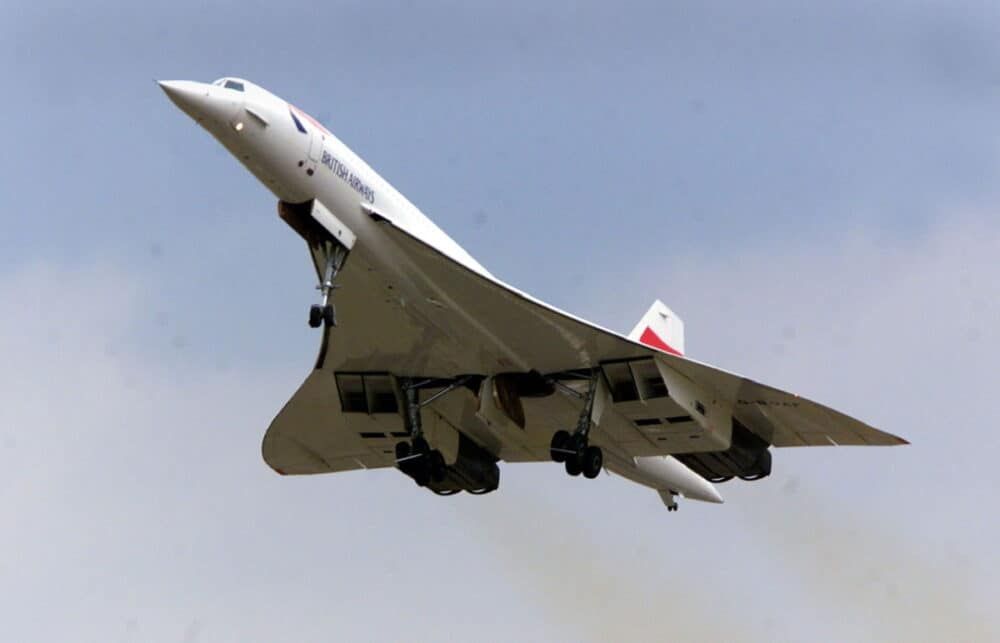
Developments after this resulted in plenty of supersonic experimental and military machine aircraft. Merely it was not until the 1960s that supersonic passenger aircraft were developed, most famously, Concorde.
Supersonic aircraft required some major changes in aircraft design:
- Significant actress power was needed to overcome additional drag at high speed.
- The wings needed to be re-designed to lower wingspan (and with information technology, elevate). The solution reached for Concorde was a delta fly, which is much more efficient at high speeds (simply with compromise and high angle of assault at low speed).
Concorde is the most well known supersonic shipping. It was a articulation development aircraft between the Great britain and French republic and was launched in 1976. Simply xx shipping were built, and only British Airways and Air France always operated them. It was non initially intended for just these ii airlines, though, and in fact, 18 airlines placed options for information technology.
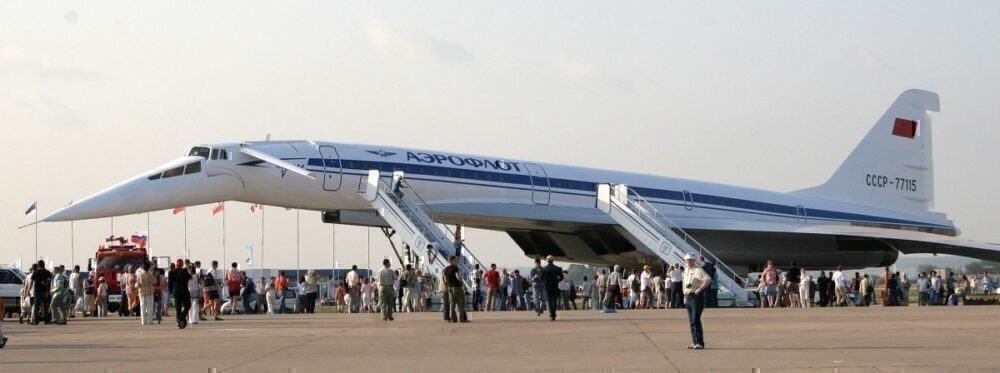
There was also a supersonic shipping developed past Russian manufacturer Tupolev, The Tu-144. And Boeing came shut to producing the supersonic 2707 but canceled the project due to insufficient orders.
Supersonic travel is an heady development, but information technology ended with the retirement of Concorde in 2003. The limitations are not so much in airplane engineering but in efficiency and cost. Loftier operating costs lead to high ticket prices, and this is not a road that manufacturers and airlines take chosen to follow post-Concorde. This may alter before long, nevertheless, with US company Smash Supersonic developing Overture, a Mach two.2 supersonic passenger shipping.
Improvements in efficiency
A major focus of the past couple of decades has been on improving plane efficiency. Many of the early on achievements were fantastic, but resulted in heavy aircraft, fuel-hungry engines, and high levels of emissions. As applied science has improved and attitudes towards carbon footprints and greener manufacture have shifted, manufacturers accept focussed on making changes.
Switching to twin engines
One of the meaning changes to affect shipping since the 1970s has been the improvement in twin-engine performance and condom. Early on jet shipping (such as the Comet and the 707) had iv engines. At the time, twin engines were severely limited in where they could fly, having to remain no more threescore minutes away from a diversion aerodrome. Transoceanic flights remained the domain of four-engine and later three-engine aircraft.
This inverse from the 1980s with the introduction of ETOPS (Extended-range Twin-engine Operational Performance Standards). This allowed twin-engine shipping to exist canonical to fly further from a diversion airport, recognizing their improving safety standards. The first rating, of 120 minutes, was given to Trans World Airlines flying a 767.
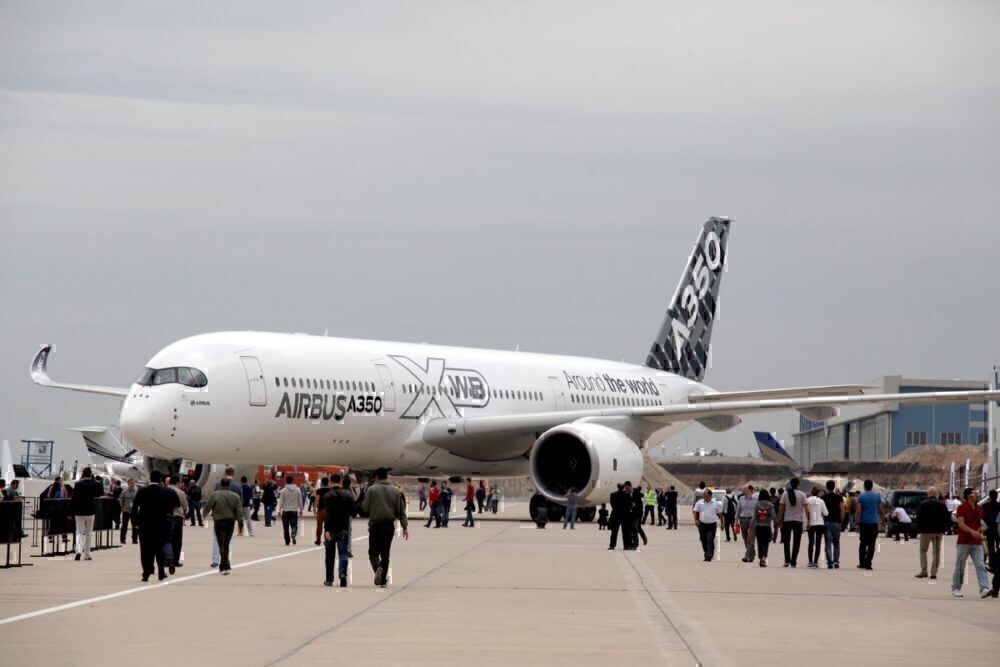
Ratings have since increased significantly. The A350, for example, is rated to wing 370 minutes from a diversion airport. This has been a major factor in the pass up of iv-engine aircraft, making mode for significant improvements in much more efficient and cost-effective twins.
Iv engines now are only needed for heavy airframes (such equally the A380). There are limited advantages in routing any more than, every bit this map of the off-limits areas for the higher ETOPS ratings show. The but places that crave four engines now are flights over Antarctica.
Improving new shipping
Equally new twins take been introduced, at that place has been a constant attempt to improve efficiency. Changes have included more efficient (and lower emission) engines, aerodynamic and wing pattern changes, and increasing employ of composite materials in shipping structure.
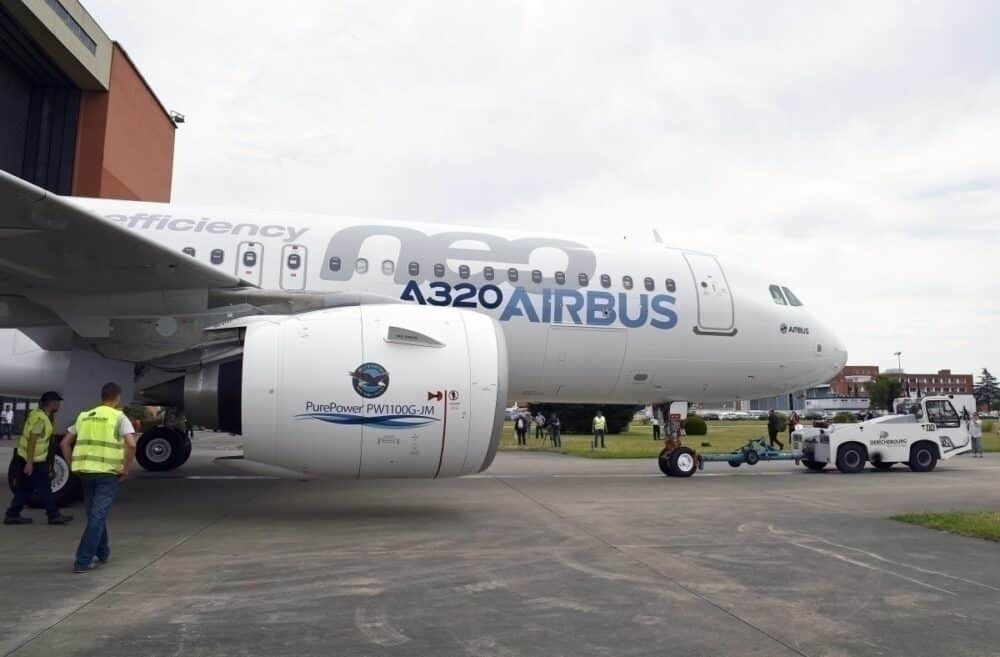
This has been 1 of the major changes in the new series of 737 and A320 aircraft introduced over the past decades. For example, each new series of the 737 has introduced improvements. The Archetype serial improved engines and aerodynamics over the Original serial; the Adjacent Generation series did the same to compete with the new A320; and the 737 MAX Series took this even further to compete with the A320neo.
To put this into numbers, according to The 737 Information Site, there is a 14% efficiency improvement between the Next Generation and 737 MAX serial. And the same source quotes fuel burn reduction of 20% moving from the Original to the Classic series and a further 7% improvement in the Next Generation series.
A like evolution has taken place with widebody aircraft. The 777 serial has seen many improvements since its launch in 1989, including efficiency improvements. And the new 777X will take this even further.
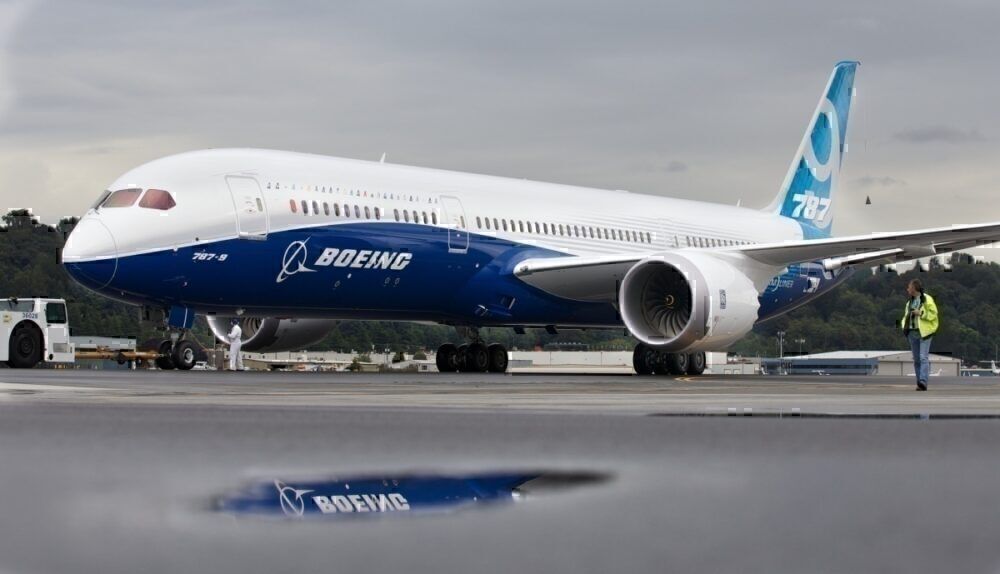
The Boeing 787 is another excellent example of this. The program was initially known as the 7E7 program. The Due east represented the leap the shipping would make in efficiency, economy, and environmental standards. And information technology has delivered on this efficiency, as Simple Flight explored previously (in comparing with the A350). It is regarded equally the almost fuel-efficient shipping on the market.
More improvements coming in the future
The 777X and further improvements in efficiency
For the moment, the near future of airplanes lies in farther technology and efficiency gains. One of the most anticipated new aircraft, the Boeing 777X, is due to enter service in 2021.
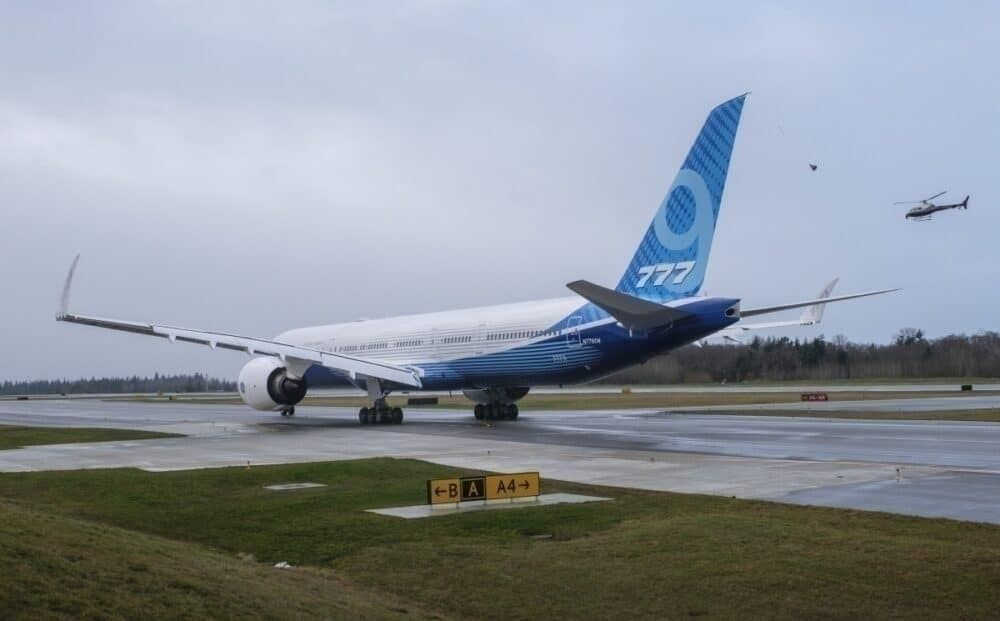
The 777X promises incredible fuel efficiency with innovations including:
- The largest engines always on a civilian shipping (though also made lighter with blended fan technology).
- Folding wingtips to allow larger wings to ameliorate efficiency, merely non restrict airport operations.
- Composite wing construction, and raked wingtips.
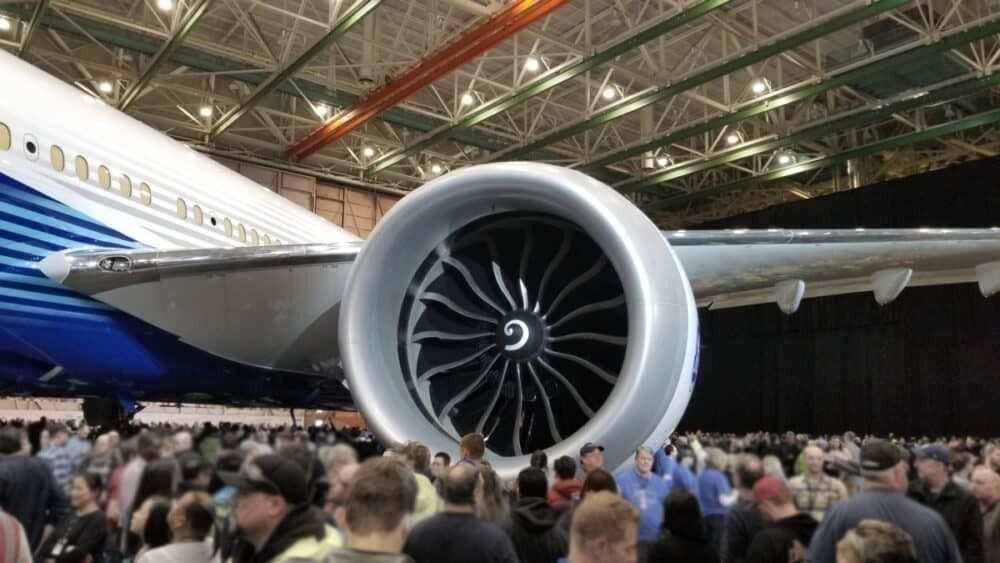
Boeing is not alone with pushing efficiency in new aircraft. The A350 is likewise a highly fuel-efficient aircraft, with 53% blended construction, 'adaptive' wings that move in flight to reduce drag and advanced aerodynamic improvements to the fly shape.
Introducing new applied science
Looking further ahead, at that place are moves to radically change how aircraft are powered. The use of kerosene is increasingly acknowledged as a problem in a carbon-conscious earth. Options currently being explored and developed include battery engineering science and hydrogen power.
Both of these technologies have seen smaller prototype developments, only are likely a long way from adoption in large aircraft design.
Battery engineering needs to improve to deliver enough power with acceptable battery size and weight. Hydrogen power requires all-encompassing engine and technology updates, likewise as a large scale change in fuel storage and commitment infrastructure globally. These are significant challenges that volition require a shift in focus to permit the investment needed, but this is starting to happen in some areas.
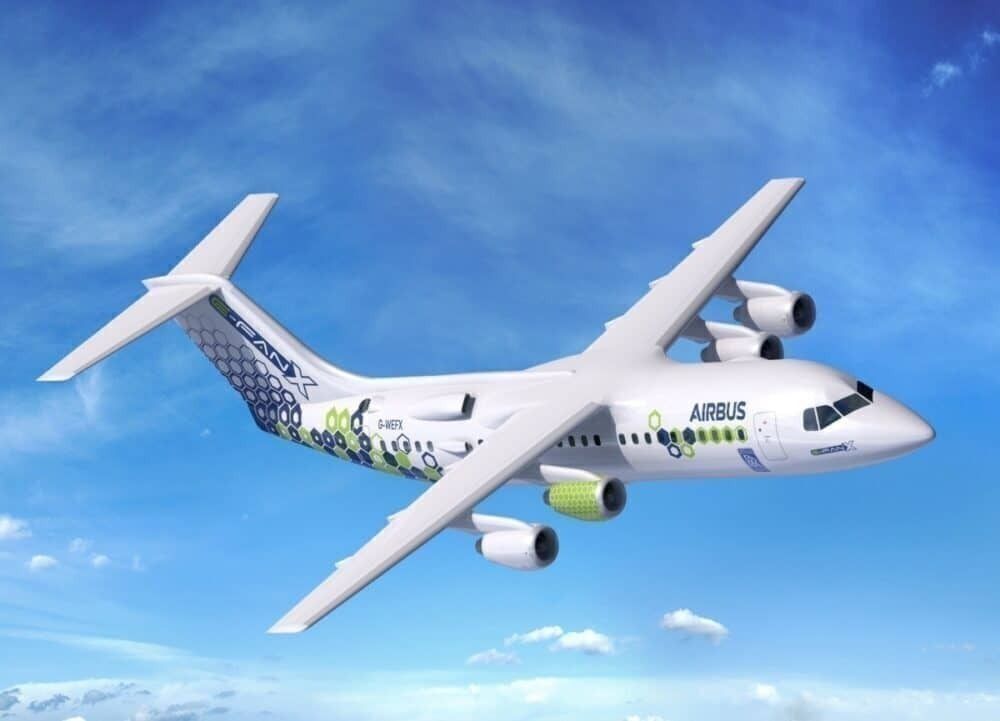
And as we move forward, loftier technology and pushing the capabilities of shipping take not been forgotten. Nail Supersonic's Overture aircraft could carry passengers as soon as 2025 (and takes much more involvement in its carbon footprint than Concorde did). And missions such equally Qantas' Project Sunrise are pushing the limits of ultra-long directly flights.
There are so many events, developments, and dissimilar shipping involved in the evolution of air travel. This article has looked at just some of the virtually meaning. Feel costless to discuss more in the comments below. We would dear to hear about other events of importance y'all would similar to highlight.
Well-nigh The Author

Source: https://simpleflying.com/the-evolution-of-the-airplane/
0 Response to "From the Depths of History She Flies Again"
Postar um comentário